
Resources and Press Release

Logo

Founder
Nicolas Meudal
Press contact
Follow our news!
Discover our articles published in Eau, Industrie & Nuisances magazine.
📅 February 27, 2026 • Published in Issue No. 489
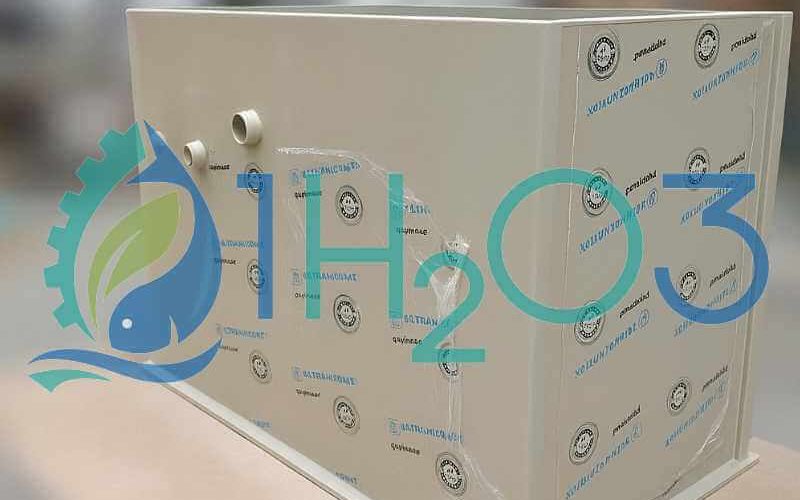
Settling without oversizing
Choosing the right lamella clarifier starts with real operating conditions: flow rate, effluent quality, available space and operational constraints.
In its article “Lamella clarifier: how to choose the right solution?”, Eau, Industrie & Nuisances magazine mentions 1h2o3 among the key players in the sector and highlights the optimization carried out in Bardos, where the addition of a lamella clarifier helped stabilize performance and reduce the load on the final filtration stage.
Nicolas Meudal points out that clarification remains a simple solution based on gravity, but one that must be properly sized to remain effective. 💧
He also emphasizes the value of combined solutions, such as pairing a lamella clarifier with a drum filter, to better manage peak loads while keeping the installation compact and easy to operate.

📅 December 31, 2025 • Published in Issue No. 487
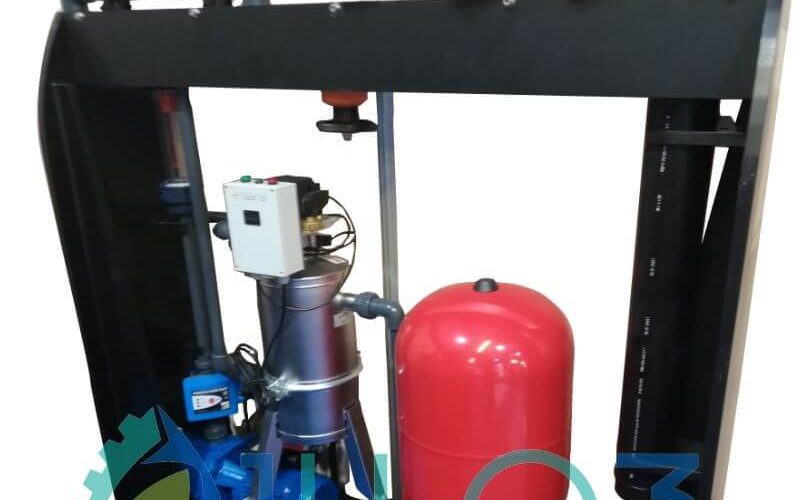
Filtering and disinfecting without adding extra volume
UV disinfection is also evolving in the way it is integrated into treatment systems.
In its feature “UV disinfection: which technology for which application?”, Eau, Industrie & Nuisances magazine mentions 1h2o3 for its work on drinking water treatment and the reuse of treated wastewater.
💬 Nicolas Meudal presents a solution that integrates UV modules directly into drum filters, allowing water to be disinfected during filtration, without any additional volume or dedicated pipework.
A compact and practical approach, designed to simplify the integration of UV treatment into existing or modular installations.
📅 July 10, 2024 • Published in Issue No. 483
Simplifying treated wastewater reuse
A successful treated wastewater reuse project depends not only on technology, but also on how it is developed with local stakeholders.
In its article “Treated wastewater reuse: the conditions for success”, Eau, Industrie & Nuisances magazine mentions 1h2o3 on the issue of project structuring, which is often decisive in moving from intention to implementation.
Nicolas Meudal highlights the importance of a shared approach between local authorities, industrial operators, engineering firms and government services, in order to overcome technical, administrative and organizational barriers.
For 1h2o3, treated wastewater reuse must remain a concrete, clear and locally adapted approach.
📅 December 31, 2024 • Published in Issue No. 477
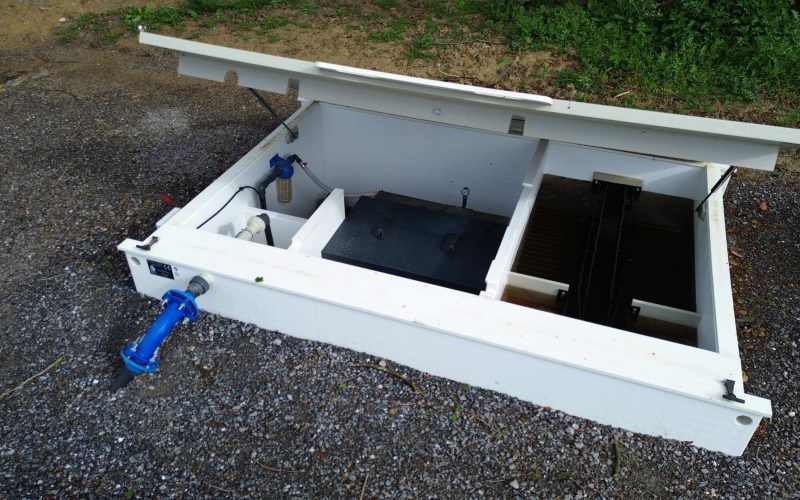
A modular asset for variable effluents
Keeping industrial wastewater treatment flexible and easy to operate
When dealing with changing effluent characteristics, ease of operation remains a key challenge for industrial sites.
In its article “Wastewater treatment: dealing with effluent variability”, Eau, Industrie & Nuisances mentions 1h2o3 for the flexibility of its modular solutions.
With compact and robust equipment, the company provides systems designed to adapt to fluctuations in effluent quality, without making day-to-day operation more complex. 💡
Nicolas Meudal highlights the importance of a streamlined design, without unnecessary sensors, developed for sites where time, space and resources are limited.
A practical approach that focuses on reliability, adaptability and operational simplicity.
📅 October 31, 2024 • Published in Issue No. 475
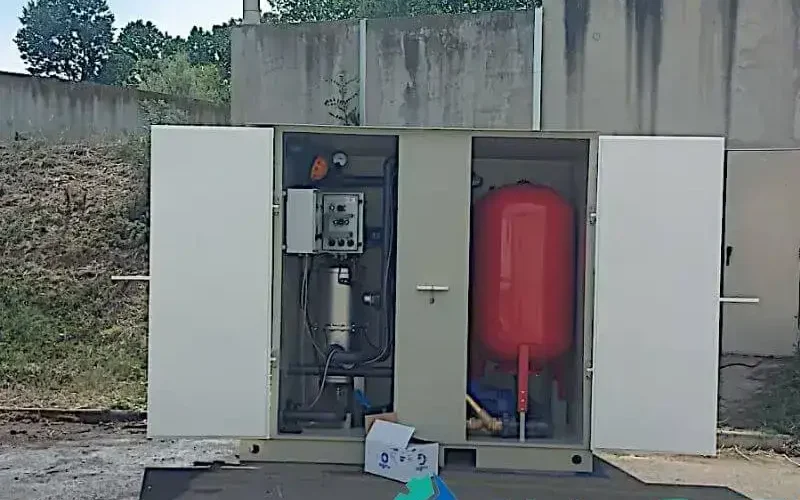
A pioneer in process water recycling
Simple and efficient water reuse for the food industry
In the article “Process water in the food industry: a turning point?”, Eau, Industrie & Nuisances mentions 1h2o3 as a key player in the reuse of wastewater from the food industry.
Through its compact solutions, the company aims to develop simple and efficient recycling loops, adapted to the specific needs of industrial sites. 🔁
Nicolas Meudal advocates for streamlined systems, without heavy automation, designed to handle the specific flows and constraints of the sector.
A pragmatic approach to make water reuse more accessible, reliable and easier to integrate into existing food-processing facilities.
📅 April 30, 2024 • Published in Issue No. 471
A mobile unit built for the unexpected
Mobile water treatment solutions for urgent and specific needs
In the article “Mobile units: solutions always on the move”, Eau, Industrie & Nuisances mentions 1h2o3 as a player in mobile response solutions for water-related emergencies.
Through its modular units, the company can intervene quickly to treat atypical water sources or provide emergency drinking water production. 💧
Nicolas Meudal advocates for simple systems that can be combined according to specific needs, designed both for crisis situations and for targeted applications.
A flexible and operational approach to deliver water treatment capacity where and when it is needed.

📅 October 31, 2023 • Published in Issue No. 465
Scaling modularly without oversizing
A step-by-step approach to complex industrial wastewater treatment
In the article “Treating non-biodegradable industrial effluents”, Eau, Industrie & Nuisances highlights 1h2o3’s modular approach to tailor-made treatment solutions.
Nicolas Meudal emphasizes the value of progressive sizing through on-site testing, using the mini-WWTP as a decision-support tool.
This approach responds to the complexity of industrial effluents by offering a flexible combination of proven technologies, without oversizing the system or locking in technical choices too early.
A practical and adaptable method for designing the right treatment process, based on real operating conditions.

📅 March 30, 2023 • Published in Issue No. 460
Adding modular capacity without rebuilding
A modular response to wastewater treatment challenges
In the article “Sanitation: a necessary acceleration”, Eau, Industrie & Nuisances mentions 1h2o3 for its ability to address two major challenges faced by wastewater treatment plants: limited available space and increasing treatment capacity requirements.
Nicolas Meudal presents a modular solution based on standardized tanks using MBBR technology. Designed to be integrated into existing facilities, this approach makes it possible to reinforce treatment performance without heavy civil engineering works or major modifications to the plant.
The system offers a practical response for local authorities looking to upgrade their infrastructure step by step, according to actual load increases and regulatory requirements.